Allergen Handover: A Lunchtime Checklist That Holds When the Hall Is Full
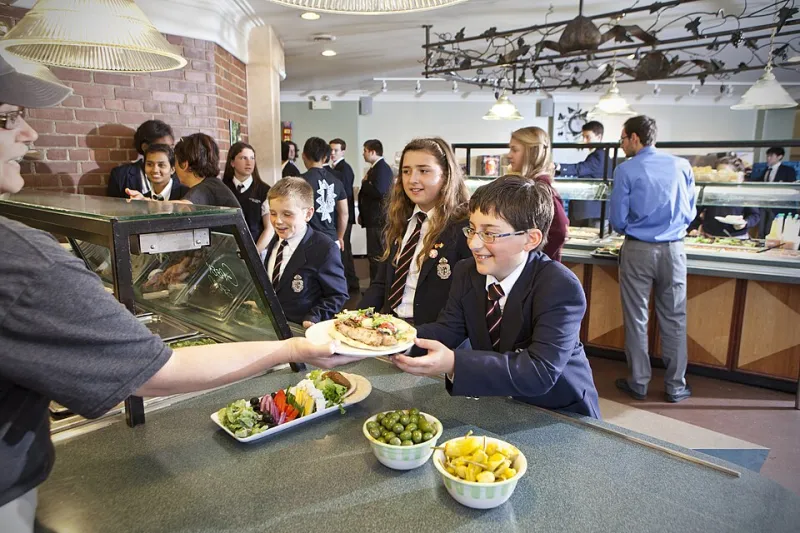
Photo: CommunicationsTCS, CC BY-SA 4.0, via Wikimedia Commons
Allergen safety is often discussed at the level of the menu board. Schools display notices, colour-code choices and remind pupils to ask if they are unsure. All of that matters. But the menu board is not where the risk usually sits. It sits in the handover: the moment a substitution is made, a message is passed from the kitchen to the hall, a supply teacher covers a class, or a midday supervisor is asked to identify a pupil in a busy line.
A lunchtime allergen checklist should therefore be designed for pressure, not for the quiet part of the day. It should be short enough to use, specific enough to guide action and owned by more than one team.
The handover is the control point
Catering staff know the menu. Class teams know the pupils. Midday supervisors know the hall. The weakness is often the space between them. A pupil may have a medical condition recorded in the office, a meal choice noted by catering and a seating arrangement known to the class teacher. If those three pieces of information do not meet, the system relies on memory.
A practical checklist starts with a shared assumption: no one should have to guess whether a pupil can eat a particular item. If the answer is not clear, the default is to pause and check, not to serve and hope.
The daily handover checklist
1. Confirm the pupil list before service
The office and catering should agree who holds the current allergen and medical list, who updates it and how often it is checked. The list should not be displayed publicly, but it should be available to the staff who need it. A named person should confirm before service that the list reflects any absence, new pupil or change of meal arrangement.
2. Lock substitutions before the first tray
Substitutions are a normal part of catering, but they need a clear route. If a product is changed, the catering lead should record the substitution, check the allergen information and decide whether an equivalent safe option is available. The notice should reach the service point and the midday supervisors before pupils arrive. A verbal message shouted across the kitchen is not a handover.
Where the allergen status of a substitution is uncertain, the item should not be served to affected pupils until it has been checked. A safe alternative should be offered rather than leaving a pupil with no meal.
3. Brief midday supervisors in five minutes
The midday supervisor briefing should be short and specific. It should cover any substitutions, any pupils who need a particular check, where the allergen list is kept and who to contact if something is unclear. Personal information should not be read aloud in front of pupils. The briefing is about roles and routes, not public disclosure.
A useful script is: 'If you are not sure whether a pupil can have an item, do not guess. Ask the catering lead or send for the office.' That single instruction prevents many small errors.
4. Brief supply and cover staff at sign-in
Supply staff and cover teachers may not know the pupils or the lunchtime routine. Their briefing should include the location of the allergen list, the name of the catering lead, the school's incident procedure and the instruction not to rely on a pupil's own recollection alone. A one-page note at sign-in is better than an assumption that someone will explain later.
5. Escalate and record incidents promptly
If a pupil has an allergic reaction, the priority is medical care. Staff should follow the pupil's individual healthcare plan, summon help and contact emergency services if needed. After the immediate response, the school should record what happened, inform parents or carers in line with policy and review the handover that was in place. The review should ask where the information broke down, not simply who was nearest.
Identification without guesswork
Identifying the right pupil is harder than it sounds in a hall of moving trays and similar uniforms. Staff should use more than one identifier: name, class, photo where available and the meal arrangement on the list. They should avoid calling out medical details. A quiet check at the service point is usually better than a public conversation.
Where a pupil is new, absent or returning after a long break, the class team should confirm the lunchtime arrangement with the office. The checklist should include a specific line for new arrivals, because they are the point at which lists and reality most often diverge.
The termly pressure test
A termly review should test the system on a normal, busy day. Pick one substitution and trace it from the kitchen decision to the service point. Ask a midday supervisor how they would check a pupil's meal. Ask a supply teacher where the allergen list is kept. Check whether the office list and the catering list agree.
This is not an inspection. It is a short exercise in finding the weak link before a pupil does. Record the date, the people involved and any action. If the same gap appears twice, change the process rather than repeating the reminder.
One page, visible where it matters
The checklist can be reduced to a single page for the staffroom and the kitchen:
- current pupil list confirmed before service;
- substitutions recorded and communicated before pupils arrive;
- midday supervisors briefed in five minutes;
- supply staff briefed at sign-in;
- uncertainty means pause and check;
- incidents escalated, recorded and reviewed.
Allergen safety is not a test of how well a school can display a notice. It is a test of whether information moves accurately between the people who prepare, serve and supervise a meal. A checklist that holds under pressure is one that makes the safe action the easy action.