Beyond the Stopwatch: A Fire Practice Debrief Worth Holding
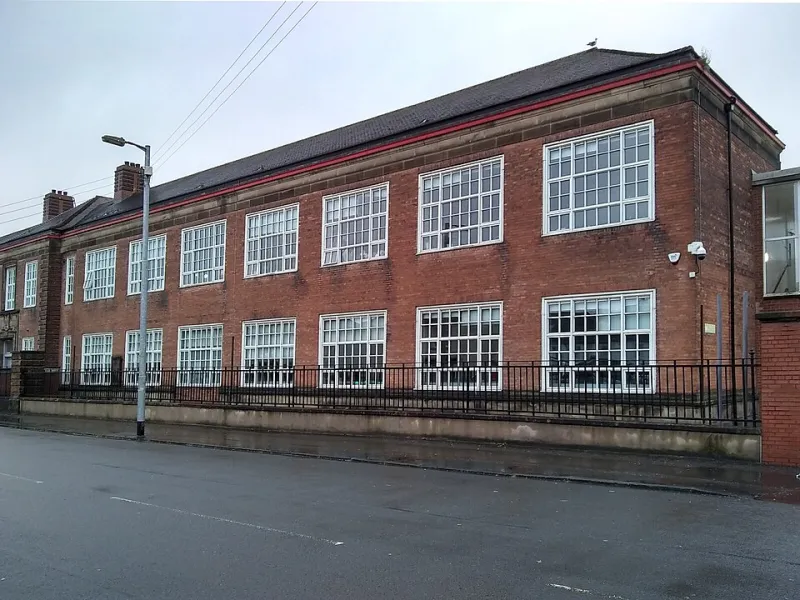
Photo: John Garfoot, CC BY-SA 2.0, via Wikimedia Commons
Every fire practice tends to end the same way. The alarm falls silent, the register is counted at the assembly point, and a time is written down. The box is ticked. The building returns to normal. And yet the most useful information of the morning — the door that would not open smoothly, the Year 7 group unsure which way to turn, the teaching assistant who went back for a pupil's medication — is often still in the heads of the people who noticed it, and rarely reaches a page.
That is not a criticism of staff. It is a design flaw in the routine. A drill is a rehearsal for an event nobody wants; its value depends less on the stopwatch than on what the school learns while the building is empty. A short, structured debrief can convert one practice into a handful of small, owned improvements before the next one. The purpose is assurance, not blame.
Why the register is only half the story
The register answers one question: who is accounted for. It does not answer whether the route was clear, whether the instructions were understood, or whether a pupil with additional needs felt able to move at the pace of the crowd. Those are questions of practice, and they are best answered by the people who walked the route.
In governance terms, this matters. The Regulatory Reform (Fire Safety) Order 2005 places duties on the responsible person, and in schools that responsibility is usually discharged through the fire risk assessment, routine checks and recorded practices. A ticked box evidences that a practice took place. It does not evidence that the arrangements worked. A brief debrief adds the second layer: a record of what was observed and what was changed as a result.
A ten-minute routine, held before dispersal
The practical obstacle is time. Once staff and pupils are dispersed, the moment is gone. The most reliable pattern is a short standstill immediately after the practice, before the normal timetable resumes. Ten minutes is enough if the questions are tight.
Three questions, asked of each group at the assembly point or in the first few minutes back in the classroom:
- What did you notice on the way out that would have slowed you down if this had been real?
- Was there anything in the instruction you were given that was unclear, or that you had to interpret?
- Is there anything you were worried about that nobody asked you about?
The first question surfaces physical issues: a door on a self-closer, a corridor used for storage, a stairwell that becomes congested. The second surfaces communication issues: whether the alarm tone was recognised, whether the message to leave by the nearest route was heard over the noise, whether a supply member of staff knew the assembly point. The third is the most easily missed: the unspoken worry of a pupil who uses a wheelchair and waited for assistance, or a member of staff who was unsure whether to take the register or sweep the toilets.
Keep the questions open. Do not ask whether everything was fine — the answer will be yes. Ask what people noticed.
Capturing it without creating a paper mountain
A debrief that produces a long form will not survive a busy term. A single side of A4, or a shared document with three columns, is sufficient:
- What we observed
- What it might mean
- Who will check it
The middle column matters. A stiff door at the end of the science corridor is an observation. A note that it could delay evacuation from two laboratories is an interpretation that helps a premises officer prioritise. The third column gives the action an owner; without a name and a date, the note becomes a suggestion.
It is worth being explicit that the debrief is not a disciplinary process. Staff will not report the awkward truth — that they were unsure of the route, that they could not hear the instruction — if they think it will appear on a file. The record should capture the issue, not the individual. Where a concern relates to a named pupil's needs, it belongs in the personal emergency evacuation plan (PEEP), reviewed separately and confidentially.
From observation to two or three owned actions
The temptation after any practice is to generate a long action list. A long list is a sign that the debrief has become a wish list. The more useful discipline is to agree no more than three actions, each with a named owner and a date, and each small enough to complete before the next practice.
Typical examples from a single drill might include: clearing a designated route of temporary storage by half term; adding the assembly point to the one-page brief given to supply staff; asking the fire marshals to sweep a specific corridor in a set order so that the sweep is not duplicated; and checking whether the alarm is audible in the music practice rooms. None of these is dramatic. All of them are the kind of detail that makes the difference between a practice that reassures and a practice that merely records.
The premises officer, the site manager or the business manager usually holds the actions, but the oversight sits with a senior leader. That separation is healthy: the person who owns the fix should not also be the person who signs off that it has been done.
The governance thread
Governors and trustees do not need the raw notes from every practice. They do need a termly summary: how many practices were held, whether the times were within the expected range, what was observed, what was changed, and what remains open. One page is enough. The summary should sit alongside the fire risk assessment and the routine maintenance record, not replace them.
This is where the debrief earns its place in the governance cycle. It turns a compliance activity into evidence of a school that listens to its own building. It also gives the responsible person something more useful than a stopwatch time when they next review the arrangements.
Testing one thing next time
A practice that repeats the same route in the same way every term tests the same things. A short debrief allows the school to set one hypothesis for the next practice: that the cleared corridor will remain clear, that the new signage will be understood, that the supply brief will be read. The next drill then becomes a check on a change rather than a repetition of a ritual.
That is a modest ambition, and it is the right one. A fire practice is not a performance. It is a conversation between the school and its building, and the debrief is the part where the school listens.