The Quiet Half-Hour: Turning a Daily Site Walk into Genuine Assurance
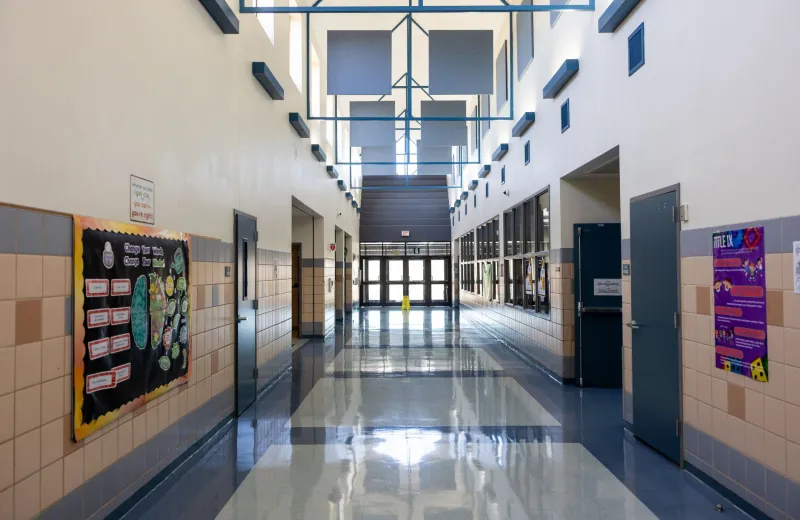
Most premises failures do not announce themselves. A failed luminaire above a fire exit, a delivery pallet edging into a corridor, a gate that no longer latches cleanly — none of these is an incident. Each is an invitation to one. The difficulty for school leaders is that the invitation is easy to miss when the day begins with a queue at the gate and ends with an email trail that has doubled since morning.
A daily site walk is not a new idea, and it is not a substitute for the statutory checks a school already commissions: the fire risk assessment, the asbestos register, water hygiene, electrical testing, gas safety. What it offers is something narrower and more immediate — a repeated human look at the places where small faults become expensive ones. Done well, it takes under half an hour and produces a single page that a headteacher, a business manager or a governing body can actually read.
Why brevity matters more than thoroughness
The instinct in schools is to design a comprehensive inspection schedule, print it in triplicate, and abandon it by the second week of the autumn term. A walk that survives must be short enough to complete on a bad day and fixed enough that its absence is noticed. Five focus points, one route, one log. That is the whole design.
Keep the route consistent so that irregularities stand out. A site manager who walks the same path each morning will register a shifted bin store or a darkened stairwell as a pattern break rather than as scenery. Vary the timing occasionally — a walk at 7.30am sees different things from one at 4.30pm — but keep the path the same.
Point one: lighting
Begin where people arrive. Check external lighting at entrances, along pedestrian routes and in car parks, particularly through the darker months when the afternoon closes in before the final clubs finish. Indoors, look at stairwells, corridors and the immediate approaches to fire exits. Note fittings that have failed, diffusers that have yellowed, sensors obscured by stacked furniture, and emergency lights that appear unlit without assuming the monthly flick test has been missed — that is a separate record and should stay separate.
Point two: access
Access covers more ground than locks. Doors that should be closed but are wedged, gates left on the latch, fobs that no longer register, barriers that have been manually overridden and not reset. Look at the separation of vehicles and pedestrians at peak times, the condition of handrails, the state of ramps, and whether the accessible toilet has quietly become a store cupboard. Where works are underway, check that temporary routes are signed and that contractor access points are being used as intended rather than as convenience.
Point three: storage
Storage is where fire risk assessments are most often undermined in practice. Corridor clutter, combustible material beneath staircases, accumulated packaging awaiting collection, charging equipment left unattended, PE mats stacked against radiators. The walk is not the place to conduct a full audit, but it is the right place to notice that the store room has spilled into circulation space. Fire doors that will not close because of a trolley are a finding worth recording every time.
Point four: signage
Signage fails slowly and invisibly. Fire action notices obscured by noticeboards, escape route signs pointing to a door now used for something else, first aid notices out of date, asbestos warning labels no longer visible before a wall is drilled. Check too that temporary signage from summer works has been removed, that visitor and contractor arrangements are legible at the entrance, and that any area closed for repair is clearly marked rather than merely understood.
Point five: repair logging
The walk has no value if its findings die in a notebook. A single log — spreadsheet, estates system or a paper sheet in the site office — should capture the date, the location, what was seen, who owns the fix, an agreed priority and a closure date. Three tiers are usually sufficient: today, this week, and plan-and-budget. The third tier is important, because it is where genuine capital needs surface before they become emergencies, and where a business manager can build a case for spending with evidence rather than anecdote.
Assurance without a second bureaucracy
Governors and trustees do not need a narrative of every walk. They need to know that the routine exists, that findings are closed, and that the exceptions have been escalated. A single-page weekly summary drawn from the log, a monthly glance at open items by the senior leadership team, and a termly report to the responsible body will normally satisfy scrutiny without generating a parallel paper trail. Photographs with date stamps are useful where a repair is disputed or delayed.
The most important discipline is to avoid duplication. If the fire risk assessment already records something, reference it rather than reproducing it. If the asbestos register covers a location, the walk should confirm the label is visible, not re-survey the material.
Making the walk survive a busy term
Name a deputy. Illness, leave and inset days will break the rhythm otherwise. Leave the checklist in a fixed place so that cover staff can pick it up without briefing, and make sure the first walk of each half term is scheduled rather than hoped for. In a multi-academy trust, a common five-point template across schools turns separate local habits into something a trust can actually compare and support.
A daily walk will not prevent every premises incident. It will, however, make the school harder to surprise — and that, for a leader holding a site in trust for its pupils, is a reasonable ambition for half an hour.